Welcome to the Spine E-News!
Issue 19: July, 2025
Welcome to the summer issue of the Spine E-News, so named after the creature featured in our logo, the Spiny Softshell Turtle (Apalone spinifera). We’re structuring the news for you in concentric circles inspired by a splash in the water: an update on Chautauqua Lake, news from the wider watershed, and updates from the world of water, complete with cross currents about our CCC activities and how you can contribute to protecting our region’s water and all life that depends on it.
Managing What’s Hard to See
Changes Are Hiding Beneath the Surface of Chautauqua Lake
The physical and environmental conditions in Chautauqua Lake are more than what meets our eyes. Looking at the water, particularly from its surface, does not reveal what has been occurring over time. “One thing you can count on is that the abundance of plants in Chautauqua Lake will be different every year.” This quote comes from Robert L. Johnson and is informed by his long record of conducting plant surveys in the lake. Johnson is responsible for producing information on the lake’s aquatic vegetation that spans nearly 20 years. What has not been done, until now, is a review of longer-term trends using his datasets in combination with additional information. Scott Kishbaugh, retired Chief of the NYSDEC Lake Monitoring and Assessment Section, Albany, and developer of the New York Citizens Statewide Lake Assessment Program (CSLAP), has taken on this task and confirmed that Chautauqua Lake conditions appear to be changing in the following ways:
- Herbicide applications are not preventing the growth of Curly-leaf pondweed the following year.
- Eurasian watermilfoil is somewhat controlled by insects and other non-herbicidal factors.
- The biomass of native plants has decreased in herbicide-treated spots and increased elsewhere.
- The Chautauqua Lake HAB season has started earlier in recent years, possibly exacerbated by herbicide applications.
- There are now more areas observed where there are no plants growing.
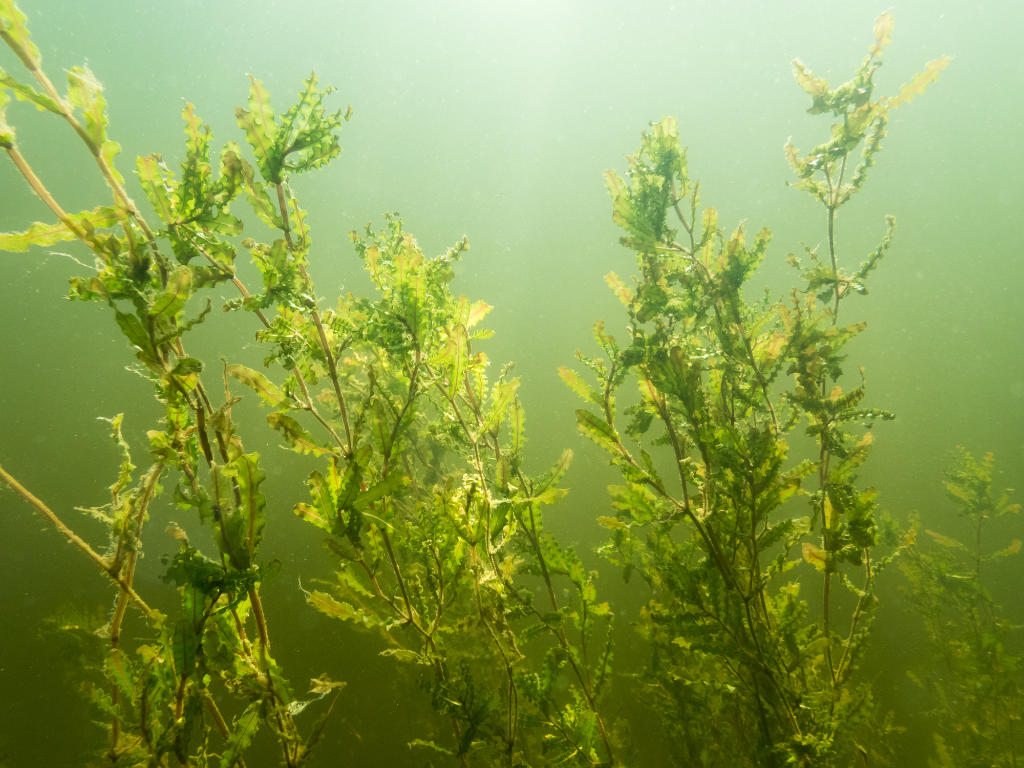
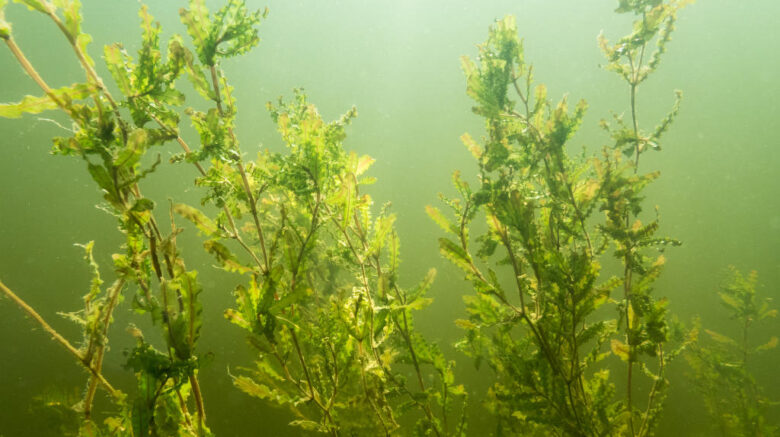
Curly-leaf pondweed, receives attention due to its spring growth that often reaches the surface. The biomass of curly-leaf varies from year to year, suggesting that insect herbivory, annual herbicide use, or other management actions have caused no long-term changes for this plant. What is changing for curly-leaf is the timing of its turion (root-like structures) and seed production. These both seem to be occurring earlier in the year. The significance of this trend is that current herbicide application occurs after turions and seeds have already formed, thus is not helping prevent growth the following year.
Eurasian watermilfoil is another plant species that draws attention and since it is classified as invasive, has been targeted for herbicide treatments. Watermilfoil has frequently not been the dominant plant in the lake, often being less than 20% of the overall biomass. Inspecting pre-herbicide treatment years (2003-2016) to post-treatment years (2017-2024) watermilfoil biomass decreased in treated sites by about 60% and in untreated sites by 30%. This suggests that insect herbivory or other factors keep watermilfoil at lower levels without herbicides.
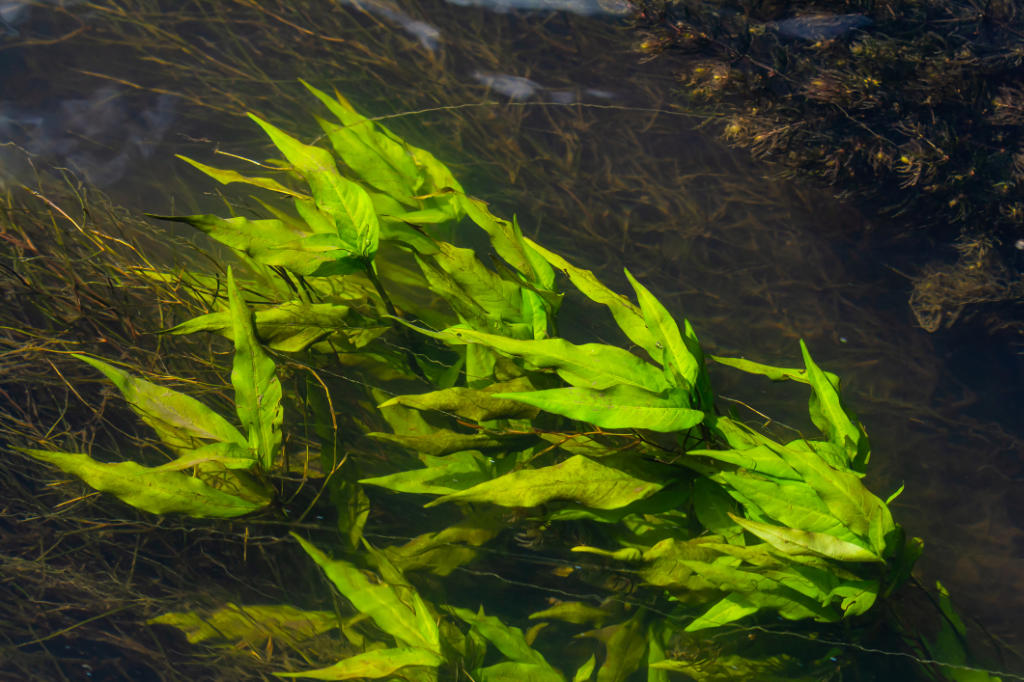
Understanding changes for native plant growth may be even more important than changes for the non-native species, Curly-leaf pondweed and Eurasian watermilfoil. Comparing pre-herbicide treatment to post-herbicide treatment years, native plant biomass decreased by 10% in treated sites, but increased by nearly 25% in untreated sites. These biomass changes strongly suggest that the native plants have experienced a net 35% decrease in treated sites. This also suggests that in untreated areas, the net changes in watermilfoil and native plants is nearly the same, with respective losses of 30% and 35% in biomass. The migration of herbicides from treated to untreated sites has not been evaluated and warrants further evaluation.
Harmful algal blooms (HABs) have been occurring for many years and in recent years are becoming an even greater concern. Visual observations are informed by measurements of phosphorus (measured as total phosphorus, or TP), one of the main nutrients fueling HABs. The Chautauqua Lake HABs season has started earlier in recent years, coinciding with an increase in June TP levels. Spring herbicide use has changed the release of curly-leaf’s nutrients from July, their natural die off time, to May. Summer watermilfoil treatment has shifted its nutrient release from mid-fall to late summer which could explain a small September increase in TP levels. The TP increases in the last few years, 2022 to 2024, have been larger than previous treatment years. The relationship between HABs, rooted plants, and nutrient release is indeed complex, and should be evaluated before further treating any plants.
The last major finding of this review involves areas where no plants are present. For some, this would mean there is no data to review. However, in the areas of freshwater lakes where plants are usually present, “no plants” is significant information. Comparing the period prior to systemic herbicide treatments (2003-2016) to the period since treatments began (2017-2024), there has been an apparent increase in the number of sites with no plants. Additionally, there has been a more pronounced increase in sites with no plants in the last four years (2021-2024), possibly due to the cumulative effect of contact and systemic herbicides. It is also noted that this increase was greater in untreated areas than in treated areas. This suggests transport of chemicals, particularly broad spectrum contact herbicides applied in the spring, from treated to untreated areas. A similar phenomenon has been observed in other New York state lakes. The increasing percentage of lake bottom sites without plants may render the lake more vulnerable to the spread of invasive starry stonewort or a new invasion from hydrilla. More denuded bottom sites can also release nutrients and sediment to the water, impacting drinking water and triggering HABs, and can reduce plant bed edges favored by anglers.
To emphasize the value of Kishbaugh’s review, it must be recognized that Johnson produced the lake’s plant surveys between 2003 through 2021, with many of these years having both a spring and late summer survey. From 2022 to the present, SUNY Oneonta continued the summer survey program using the identical PIRTRAM methodology procedures as Johnson and as recommended by the NYSDEC. This continuity of methodology not only makes this temporal review possible, it makes it extremely valuable and unique.
Key to this review is determining the amount of plant material in the water. This quantity is known as the biomass and is acquired from specific lake data. Biomass indicates the abundance of a particular plant within an area. The survey of lake-wide data points indicates its distribution. By comparing biomass to other verified information, findings emerge. What we see affects our personal decisions relating to water. Whether we choose to swim in the water or to drink a glass of water likely depends on how the water looks. The view of the water, its aesthetics, has been a factor that has influenced bigger, lake-wide management decisions. These findings offer more than visual inspection. They provide the unique perspective of a longer period of time, rarely made available, that can widen the view of the water and protect what is living under the water.
These changing lake conditions have multiple causes, including human action and climate change. Individuals and entities making plant management decisions now have information about these lake changes which can help inform timing and choices for plant management. Further review, that could include fishery or more nutrient or herbivore information, can only enhance the value of this longer-term knowledge. This review process is a part of the evaluation, that should be on-going, to know if the multiple uses of Chautauqua Lake are being supported.
These findings were made possible due to the considerable investment of time and analysis needed for their development. Long-term, continuous aquatic plant, water quality and HABs datasets are extremely rare. Those interested in protecting and restoring the lake uses should use these comprehensive datasets as the basis for evaluating lake conditions. The valuable Chautauqua Lake data sets available to all reviewers include the following:
- Aquatic flora and fauna surveys conducted by Racine-Johnson Aquatic Ecologists from 2004 to 2021 and SUNY Oneonta from 2022 to 2024. Aquatic plant surveys were conducted using the same NYSDEC approved PIRTRAM survey methods, allowing for survey results to be compared within the lake and over time. Available at the Chautauqua Lake Association website.
- Water quality data collected every other week for phosphorus, algae and other water quality measures through the New York State Citizens Statewide Lake Assessment Program (CSLAP) from 1987 to the present, using NYSDEC approved methods and summarized in publicly available reports. Available at the CSLAP Dashboard.
- Harmful algal bloom (HAB) reports throughout both lake basins since 2012 using NYSDEC approved methodologies, with bloom samples analyzed by state approved laboratories. Available at NYHABs website.
For the documentation and further discussion of this review, go to the CCC website.
All Defense – All the Time
Environmentalists Battle for Clean Water Everywhere
From the Chesapeake Bay to the Great Lakes and beyond, the environmental movement is struggling hard to maintain gains had won over the past 50 years. Funding cuts, budget reductions, regulation rollbacks, and new uncertainty regarding the eco-friendliness of court rulings have rocked the environmental movement back on its heels.
As the NOAA lab charged with protecting the Great Lakes from harmful algal blooms (HABS) fights for its survival, we are mindful of forecasts that call for a moderate HAB season in Lake Erie this year, and we are already seeing algal blooms in Chautauqua Lake and its tributaries as of the last week in June.
In the Finger Lakes region, the battle against heavy, long-term use of herbicides to combat hydrilla in Cayuga Lake is reaching a crescendo with advocacy groups finding that long-term use of herbicides there threatens the purity of drinking water while having done little to control the plant growth.
The courts offer glimmers of hope, however, and our colleagues at Waterkeeper Alliance are celebrating the recent Federal District Court ruling that stymied the rollback of EPA pollution standards. But despite occasional wins, staff at the Chesapeake Bay Foundation put this full-time defensive effort in perspective when they point to the effects of the combination of budget cuts, regulation relaxation, and especially the flood of talent leaving the EPA, NOAA, and other Federal agencies charged with upholding environmental quality. The relentlessness and senselessness of the cuts runs through the hearts and minds of advocates, notes Hilary Harp Falk of the Chesapeake Bay Foundation. “You can see, touch, and swim in the progress that has been made…It’s getting better and the idea that we would stop or take a step back is really heard to get your head around.”
General Wetlands Permits Are Now Available
Changes to the freshwater wetland regulations in New York State went into effect on January 1, 2025. They were greeted with pushback from some voices in our region. A major part of local concern is the rights of property owners who may live near or in a wetland. The regulations are meant to protect existing wetlands, thus some human actions in or near wetlands need to be monitored by permits. The state has always had General Permits to ease and simplify the permit application process. They cover a variety of actions that can be described as common, regular or maintenance work. The rights of all individuals living near and in wetland areas are the framework for a General Permit. The first of a series of General Permits for freshwater wetlands is now available on the DEC website.
Short Takes from the Waterkeeper Files
Around the Consortium
The Chautauqua-Conewango Consortium has recently completed and posted a wetlands appreciation video that celebrates the value of wetlands in our ecosystem. For supporting the production of our recent videos, the Consortium would like to salute and thank the staff of Freshwater Future, seen below during our recent collaboration at a water conference in Rochester.

We’ll plan on seeing you at the Wild America Nature Festival at Panama Rocks on July 19 and 20.
What You Can Do For the Water
- Ask your town or village officials not to apply for herbicide permits in Chautauqua Lake. The aquatic herbicides used in the lake are not specific for invasive species and the plants killed by herbicides release their nutrients to the surrounding water and sediments, areas that are already overloaded with nutrients
- Get serious about keeping nutrients on the land and not in the water. Keep your water on your own property.
- Please monitor and support the many important advocacy, petition, and sign-on activities being undertaken by the Waterkeeper Alliance, including its current PFAS advocacy efforts. This is a critical time for the environmental movement and action to support conservation and environmental justice is needed now more than ever.
- Thank you for your time, attention, and concern for our water. Please consider supporting our mission with the donation of your time or treasure. Volunteers are needed now for water monitoring and PFAS testing.